
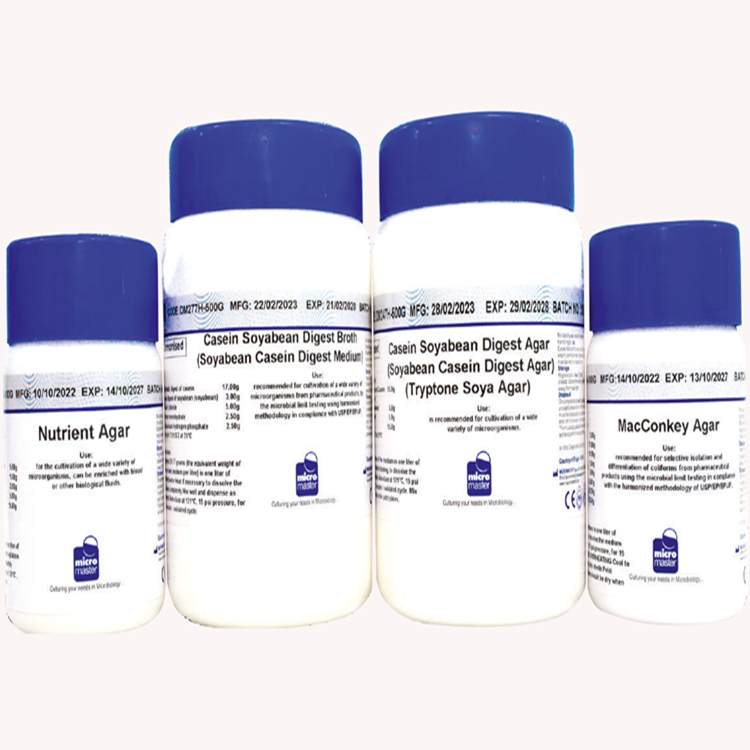
Fluid Selenite Cystine Medium (Selenite Cystine Broth) (Twin Pack)
Pack Size: 500gm
Brand: Micro Master
Origin: India
Intended Use
Fluid Selenite Cystine Medium (Selenite Cystine Broth) (Twin Pack) (DM475) is recommended for enrichment and isolation of Salmonella from feces, urine, water, foods and other materials of sanitary importance.
Product Summary and Explanation
Selective inhibitory effects of selenite were first demonstrated by Klett.(1) Guth(2) used it to isolate Salmonella typhi. Leifson(3) found that selenite inhibited fecal streptococci and coliforms during the first 8-12 hours of incubation, thereby permitting salmonellae to replicate without overwhelming interference from other members of the intestinal flora. North and Bartram(4) modified Leifson’s Selenite-F Enrichment broth by adding cystine, which stimulated growth of Salmonella. The cystine-containing formulation is recommended by the Food and Drug Administration, AOAC International and American Public Health Association for detecting Salmonella in foods, particularly egg products and waters.(5-8) It is also recommended by APHA and USP.(9,10) Selenite Cystine Broth is useful for detecting Salmonella in the non-acute stages of illness when organisms occur in the faeces in low numbers and for epidemiological studies to enhance the detection of low numbers of organisms from asymptomatic or convalescent patients.(11) Salmonella are also injured during various food processing procedures, including exposure to low temperatures, submarginal heat, drying, radiation, preservatives or sanitizers.(12) Since, Salmonella may be present in low numbers in food sample in an injured condition; recovery of Salmonella involves pre-enrichment, selective enrichment and selective plating. Fluid Selenite Cystine Medium is used as selective enrichment medium for the cultivation of Salmonella species. This medium is formulated to allow the proliferation of Salmonella while inhibiting the growth of competing non-Salmonella organisms.
Principles of the Procedure
Fluid Selenite Cystine Medium (Selenite Cystine Broth) (Twin Pack) contains casein enzymic hydrolysate provides nitrogenous substances. Lactose is the fermentable carbohydrate and maintains the pH in medium as selenite is reduced by bacterial growth and alkali is produced. An increase in pH lowers the toxicity of the selenite and results in overgrowth of other bacteria. The acid produced by bacteria due to lactose fermentation serves to maintain a neutral pH. Phosphate maintains a stable pH and also lessens the toxicity of selenite. L-cystine is the reducing agent, improving the recovery of Salmonella. Enriched broth is subcultured on solid medium. Do not incubate the broth longer than 24 hours as inhibitory effect of selenite reduces after 6-12 hours of incubation.(13)
Formula / Liter
| Ingredients | : Gms / Liter |
| Part A | : — |
| Casein enzymic hydrolysate | : 5.00 |
| Lactose | : 4.00 |
| Sodium phosphate | : 10.00 |
| L-Cystine | : 0.01 |
| Part B | : — |
| Sodium hydrogen selenite | : 4.00 |
| Final pH: 7.0 ± 0.2 at 25°C | |
| Formula may be adjusted and/or supplemented as required to meet performance specifications | |
Precautions
1. For Laboratory Use only.
2. IRRITANT. Irritating to eyes, respiratory system, and skin.
3. Sodium hydrogen selenite (Sodium bi -selenite) is very toxic, corrosive agent and causes teratogenicity. Handle with great care. Upon contact with skin, wash immediately with a lot of water.
Directions
1. Suspend 4 grams of Part B in one liter of distilled water.
2. Add 19.01 grams of Part A. Mix well.
3. Warm to dissolve the medium completely.
4. Distribute in sterile test tubes.
5. Sterilize in a boiling water bath or free flowing steam for 10 minutes.
6. DO NOT AUTOCLAVE.
7. Excessive heating is detrimental. Discard the prepared medium if large amount of selenite is reduced (indica ted by red precipitate at the bottom of tube / bottle).
Quality Control Specifications
| Dehydrated Appearance | : Part A: Cream to yellow homogeneous free flowing powder |
| : Part B: White to cream homogeneous free flowing powder | |
| Prepared Medium | : Light yellow coloured, clear to slightly opalescent solution of complete medium |
| Reaction of [(1.9% w/v) Part A and (0.4% w/v) Part B] Solution |
: pH: 7.0 ± 0.2 at 25°C |
| Gel Strength | : Not Applicable |
Expected Cultural Response: Cultural characteristics observed after an incubation at 35-37°C for 18 -2 4 hours when sub cultured on MacConkey Agar.
| Sr. No. |
Organisms | Results to be achieved | ||
| Inoculum (CFU) |
Growth | Colour of the medium |
||
| 1. | Escherichia coli ATCC 25922 | 50-100 | little-none (no increase in numbers) |
pink with bile precipitate |
| 2. | Salmonella choleraesuis ATCC 12011 | 50-100 | good-luxuriant | colourless |
| 3. | Salmonella typhimurium ATCC 14028 | 50-100 | good-luxuriant | colourless |
| 4. | Salmonella typhi ATCC 6539 | 50-100 | good-luxuriant | colourless |
| 5. | Escherichia coli NCTC 9002 | 50-100 | little-none (no increase in numbers) |
pink with bile precipitate |
| 6. | Escherichia coli ATCC 8739 | 50-100 | little-none (no increase in numbers) |
pink with bile precipitate |
The organisms listed are the minimum that should be used for quality control testing.
Test Procedure
1. Prepare food sample following the recommended procedure.
2. Inoculate into recommended pre-enrichment broth.
3. Transfer 1 mL of mixture to 10 mL Selenite Cystine Broth and to 10 mL Tetrathionate Broth.
4. Incubate at 35°C for 24 ± 2 hours.
5. Mix and streak 3 mm loopful (10 μL) of sample from both broths onto Bismuth Sulfite Agar, Xylose Lysine Desoxycholate Agar, Hektoen Enteric Agar or MacConkey Agar.
6. Examine plates for the presence of colonies that are typical for Salmonella spp.
7. Refer appropriate references for standard test procedures.
Results
Refer appropriate references and procedures for interpretation of results.
Storage
Store the sealed bottle containing the dehydrated medium at 10 – 30°C. Once opened and recapped, place container in a low humidity environment at the same storage temperature. Protect from moisture and light.
Expiration
Refer to the expiration date stamped on the container. The dehydrated medium should be discarded if not free flowing, or if the appearance has changed from the original color. Expiry applies to medium in its intact container when stored as directed.
Limitations of the Procedure
1. For identification, organisms must be in pure culture. Morphological, biochemical and/or serological tests should be performed for final identification.
2. Consult appropriate texts for detailed information and recommended procedures.
Related products


Top rated products
-
 Precision Balance, 1 mg - 420g, OHAUS, USA
1,023,022.00৳
Precision Balance, 1 mg - 420g, OHAUS, USA
1,023,022.00৳
-
 Vertebral Column with Pelvis & Femur Heads & Painted Muscles
-
 Brain Model
-
 Larynx Heart and Lung Model
-
 High Quality Nurse Training Doll (Male)
-
 Contraception Guidance Model
-
 pH Meter, Bench Type, OHAUS, USA
-
 Precision Balance, 0.01 g - 6,200 g, OHAUS, USA
1,159,340.00৳
Precision Balance, 0.01 g - 6,200 g, OHAUS, USA
1,159,340.00৳
-
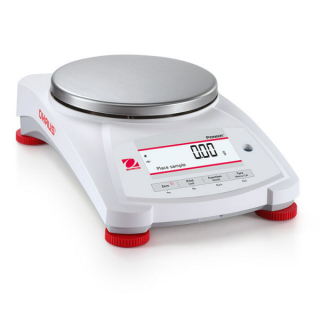 Precision Balance, 0.1 g - 4,200 g, OHAUS, USA
290,472.00৳
Precision Balance, 0.1 g - 4,200 g, OHAUS, USA
290,472.00৳
-
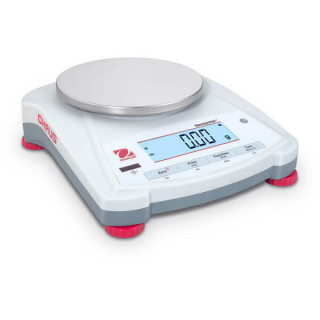 Portable Balance, 0.01 g - 220 g, OHAUS, USA
82,555.00৳
Portable Balance, 0.01 g - 220 g, OHAUS, USA
82,555.00৳
Reviews
There are no reviews yet.