
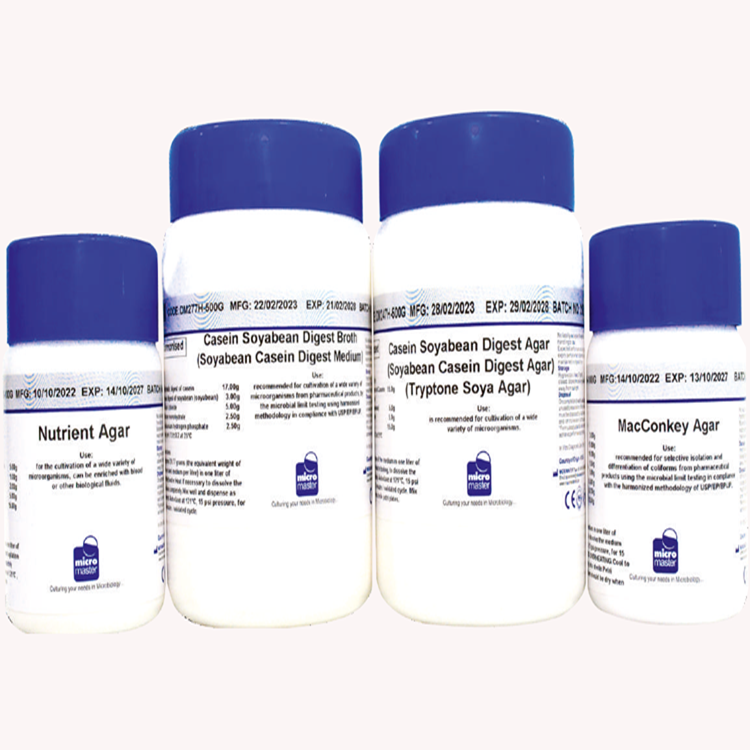
Xylose-Lysine Deoxycholate Agar
Pack Size: 500gm
Brand: Micro Master
Origin: India
Intended Use
Xylose-Lysine Deoxycholate Agar (DM297H) is recommended for selective isolation and enumeration of Salmonella typhi and other Salmonella species from pharmaceutical products using microbial limit testing in compliance with harmonized methodology of USP/EP/BP/JP.
Product Summary and Explanation
The Enterobacteriaceae is a large family of Gram-negative bacteria that includes, along with many harmlesssymbionts, many of the more familiar pathogens, such as Salmonella, Escherichia coli, Yersinia pestis, Klebsiella and Shigella. Other disease-causing bacteria in this family include Proteus, Enterobacter, Serratia, and Citrobacter. They normally inhabit the intestines of humans and animals.(1) Human Salmonella infections are most commonly caused by ingestion of food, water or milk, contaminated by human or animal excreta.(2) A wide variety of media have been developed to aid in the selective isolation and differentiation of enteric pathogens. Due to the large numbers of different microbial species and strains with varying nutritional requirements and chemical resistance patterns, investigators have developed various formulae to meet general as well as specific needs relative to isolation and identification of the microorganisms. Xylose Lysine Deoxycholate Agar is a selective as well as differential medium formulated by Taylor(3-7) for the isolation and identification of enteric pathogens especially Shigellae from stool samples. This medium is also employed for pharmaceutical testing and non-sterile product testing for the detection (or absence) of Salmonella after enrichment in Rappaport Vassiliadis Salmonella Enrichment Broth (DM1405H) in accordance with the harmonized method of USP/EP/BP/JP/IP.(8-12)
Principles of the Procedure
Xylose-Lysine Deoxycholate Agar contains yeast extract which is a source of nitrogen, carbon, and vitamins required for organism growth. Deoxycholate, ferric ammonium citrate and sodium thiosulphate are selective agents that inhibit gram-positive microorganisms. Xylose, lactose, and sucrose are fermentable carbohydrate sources. Almost all the enteric bacteria except Shigellae, ferment xylose fermented which enables the differentiation of Shigellae from Salmonellae. Salmonellae metabolize the xylose and decarboxylate lysine and thus changing the pH to alkaline and mimic Shigellae reaction. Lactose and sucrose are added in excess to produce acid and hence non-pathogenic H2S producers do not decarboxylate lysine thereby preventing Shigellae reaction by lysine positive coliforms. Sodium thiosulphate prevents the desication of these compounds during storage by reactivating sulphur containing compounds. It also forms the substrate for enzyme thiosulphate reductase, which breaks it to form H2S. Thiosulphate and ferric ammonium citrate forms H2S indicator system. Sodium thiosulphate is also inactivator of halogens, mercurial and aldehyde and can minimize its toxicity in the testing sample, if any during microbial limit tests. Sodium chloride maintains the osmotic equilibrium in this medium. Phenol red is the pH indicator.
Formula / Liter
| Ingredients | : Gms / Liter |
| Xylose | : 3.50 |
| L-Lysine | : 5.00 |
| Lactose monohydrate | : 7.50 |
| Sucrose | : 7.50 |
| Sodium chloride | : 5.00 |
| Yeast extract | : 3.00 |
| Phenol red | : 0.08 |
| Sodium deoxycholate | : 2.50 |
| Sodium thiosulphate | : 6.80 |
| Ferric ammonium citrate | : 0.80 |
| Agar | : 13.50 |
| Final pH: 7.4 ± 0.2 at 25°C | |
| Formula may be adjusted and/or supplemented as required to meet performance specifications | |
Precautions
1. For Laboratory Use only.
2. IRRITANT. Irritating to eyes, respiratory system, and skin.
Directions
1. Suspend 54.8 g (the equivalent weight of dehydrated medium per litre) in one liter of purified water.
2. Heat with frequent agitation until the medium boils.
3. Do not heat in an autoclave.
4. Transfer immediately to a water bath at 50°C. After cooling, pour into sterile Petri plates.
5. It is advisable not to prepare large volumes, which will require prolonged heating and may produce precipitate.
Quality Control Specifications
| Dehydrated Appearance | : Light yellow to pink homogeneous free flowing powder |
| Prepared Medium | : Red coloured clear to slightly opalescent gel forms in Petri plates |
| Reaction of % Solution | : Not Applicable |
| Gel Strength | : Firm, comparable with 1.35% Agar gel |
Cultural Response
Growth Promotion is carried out in accordance with the harmonized method of USP/EP/BP/JP/IP. Cultural response was observed after an incubation at 30-35°C for specified time. Recovery rate is considered as 100% for bacteria growth on Soyabean Casein Digest Agar.
Growth promoting properties
Growth of microorganism comparable to that previously obtained with previously tested and approved lot of medium occurs at the specified temperature for not more than the shortest period of time specified inoculating <=100 cfu(at 30-35°C for <=18 hours).
Indicative properties
Colonies are comparable in appearance and indication reaction to those previously obtained with previously tested and approved lot of medium occurs for the specified temperature for a period of time within the range specified inoculating <=100cfu (at 30-35°C for 18-72 hours).
Inhibitory properties
No growth of the test microorganism occurs for the specified temp for not less than longest period of time specified inoculating >=100cfu (at 30-35°C for >= 72 hours).
Expected Cultural Response: Cultural characteristics observed after incubation at 30-35°C for 18-48 hours. Recovery rate is considered as 100% for bacteria growth on Soyabean Casein Digest Agar.
| Sr. No. |
Organisms | Results to be achieved | |||||
| Inoculum (CFU) |
Growth | Observed Lot value (CFU) |
Recovery | Colour of Colony |
Incubation period |
||
| Growth Promoting + Indicative | |||||||
| 1. | Salmonella Typhimurium ATCC 14028 |
50-100 | luxuriant | 25-100 | >=50% | red with black centres |
18-72 hrs |
| 2. | Salmonella Abony NCTC 6017 |
50-100 | good- luxuriant |
25-100 | >=50% | red with black centres |
18-72 hrs |
| Additional Microbiological testing | |||||||
| 3. | Escherichia coli ATCC 8739 |
50-100 | fair | 10-30 | 20-30% | yellow | 18-72 hrs |
| 4. | Escherichia coli ATCC 25922 |
50-100 | fair | 10-30 | 20-30% | yellow | 18-72 hrs |
| 5. | Escherichia coli NCTC 9002 |
50-100 | fair | 10-30 | 20-30% | yellow | 18-72 hrs |
| 6. | Proteus vulgaris ATCC 13315 |
50-100 | good- luxuriant |
25-100 | >=50% | grey with black centres |
18-72 hrs |
| 7. | Salmonella Paratyphi A ATCC 9150 |
50-100 | good- luxuriant |
25-100 | >=50% | red | 18-72 hrs |
| 8. | Salmonella Paratyphi B ATCC 8759 |
50-100 | good- luxuriant |
25-100 | >=50% | red with black centers |
18-72 hrs |
| 9. | Salmonella Enteritidis ATCC 13076 |
50-100 | good- luxuriant |
25-100 | >=50% | red with black centers |
18-72 hrs |
| 10. | Salmonella Typhi ATCC 6539 |
50-100 | good- luxuriant |
25-100 | >=50% | red with black centers |
18-72 hrs |
| 11. | Shigella dysenteriae ATCC 13313 |
50-100 | good- luxuriant |
25-100 | >=50% | red | 18 -72 hrs |
| 12. | Shigella flexneri ATCC 12002 |
50-100 | fair-good | 15-40 | 30-40% | red | 18-72 hrs |
| 13. | Shigella sonnei ATCC 25931 |
50-100 | fair-good | 15-40 | 30-40% | red | 18-72 hrs |
| 14. | Enterobacter aerogenes ATCC 13048 |
50-100 | fair | 10-30 | 20-30% | yellow | 18-72 hrs |
| 15. | Enterobacter cloacae ATCC 13047 |
50-100 | fair | 10-30 | 20-30% | yellow | 18-72 hrs |
| 16. | Staphylococcus aureus ATCC 25923 |
>=10³ | inhibited | 0 | 0% | —- | >=72 hrs |
| 17. | Staphylococcus aureus ATCC 6538 |
>=10³ | inhibited | 0 | 0% | —- | >=72 hrs |
| 18. | Enterococcus faecalis ATCC 29212 |
>=10³ | inhibited | 0 | 0% | —- | >=72 hrs |
The organisms listed are the minimum that should be used for quality control testing.
Test Procedure
Refer to appropriate references for standard test procedures.
Results
1. Degradation of fermentable sugars proceed concurrently and generates acids, which cause pH indicator to give various shades of colour, causing a colour change in the colonies and in the medium from red to yellow on prolonged incubation.
2. Hydrogen sulfide production results in colonies with black centers under alkaline conditions, which can be inhibited by acid production by carbohydrate fermentation. Alkaline condition causes the colour of the medium to change back to red.
3. This medium is an ideal medium for screening samples containing mixed flora of enteric pathogens as recovery of Salmonellae and Shigellae is not conspicuous by even profuse growth of other species.(13,14)
Storage
Store the sealed bottle containing the dehydrated medium at 2-30°C. Once opened and recapped, place container in a low humidity environment at the same storage temperature. Protect from moisture and light.
Expiration
Refer to the expiration date stamped on the container. The dehydrated medium should be discarded if not free flowing, or if the appearance has changed from the original color. Expiry applies to medium in its intact container when stored as directed.
Limitations of the Procedure
1. Red, false-positive colonies may occur with some Proteus and Pseudomonas species.
2. Incubation in excess of 48 hours may lead to false-positive results.
3. S. Paratyphi A, S. Choleraesuis, S. pullorum and S. gallinarum may form red colonies without black centers, thus resembling Shigella species.
4. Some Proteus strains will give black-centered colonies on XLD Agar.
5. Consult appropriate texts for detailed information and recommended procedures.
Related products



Top rated products
-
 Analytical Balance, 0.1mg - 220g, OHAUS, USA
421,694.00৳
Analytical Balance, 0.1mg - 220g, OHAUS, USA
421,694.00৳
-
 Life-Size Lumbar Vertebrae with Sacrum & Coccyx and Herniated Disc
-
 45CM Unisex Torso 23 Parts
-
 New Style Life-Size Heart Model
-
 Muscle of Human Leg (13Parts)
-
 The Model of Newborn Intubation
-
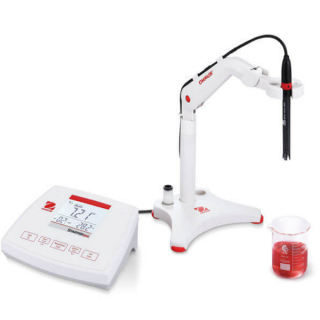 pH Meter, Bench Type, OHAUS, USA
-
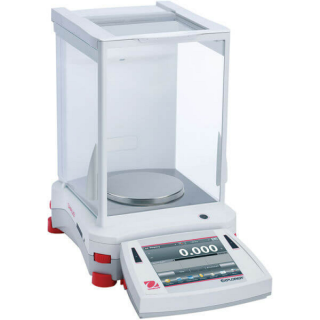 Precision Balance 1mg - 620g, OHAUS, USA
1,173,354.00৳
Precision Balance 1mg - 620g, OHAUS, USA
1,173,354.00৳
-
 Precision Balance, 0.01 g - 3,200 g, OHAUS, USA
380,926.00৳
Precision Balance, 0.01 g - 3,200 g, OHAUS, USA
380,926.00৳
-
 Portable Balance, 0.1 g - 620 g, OHAUS, USA
83,829.00৳
Portable Balance, 0.1 g - 620 g, OHAUS, USA
83,829.00৳
Reviews
There are no reviews yet.