
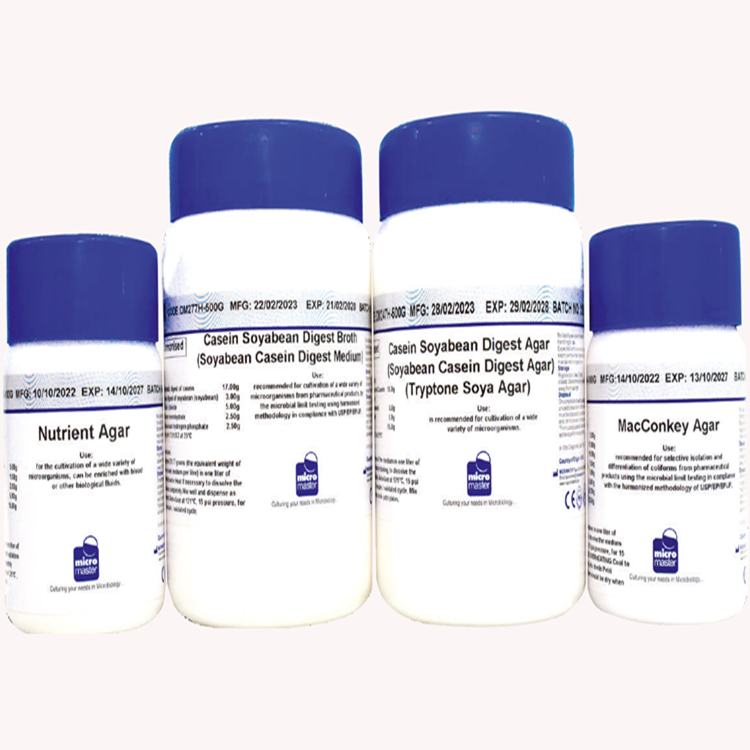
Casein Soyabean Digest Agar (Soyabean Casein Digest Agar) (Tryptone Soya Agar)
Pack Size: 500gm
Brand: Micro Master
Origin: India
Intended Use
Casein Soyabean Digest Agar (Soyabean Casein Digest Agar) (Tryptone Soya Agar) (DM247) is recommended for cultivation of a wide variety of microorganisms.
Product Summary and Explanation
In 1955, Leavitt et al.(1) discovered that Soyabean Casein Digest Agar facilitated vigorous growth of aerobic and anaerobic microorganisms. Soyabean Casein Digest Agar is a widely used medium, which supports the growth of wide variety of organisms even that of fastidious ones such as Neisseria, Listeria, and Brucella etc. The medium is used in USP Growth Promotion testing and when testing the suitability of counting methods in the presence of product.(2) TSA has a multitude of uses in the clinical laboratory including maintenance of stock cultures, plate counting, isolation of microorganisms from a variety of specimen types and as a base for media containing blood.(3-6) It is also recommended for use in industrial applications when testing water and wastewater,(7) food,(8-13) dairy products,(14) and cosmetics.(9-15) The medium with addition of blood provides perfectly defined haemolysis zones, while preventing the lysis of erythrocytes due to its sodium chloride content. It has been frequently used in the health industry to produce antigens, toxins etc. It’s simple and inhibitor-free composition makes it suitable for the detection of antimicrobial agents in the food and other products. Tryptone Soya Agar is recommended by various pharmacopoeias as sterility testing medium.(2,16) Tryptone Soya Agar conforms as per USP(2) and is used in microbial limit test and antimicrobial preservative – effective test. Gunn et al(17) used this medium for the growth of fastidious organisms and study of haemolytic reaction after addition of 5% v/v blood. Soyabean Casein Digest Agar does not contains X and V growth factors. It can be conveniently used in determining the requirements of these growth factors by isolates of Haemophilus by the addition of X-factor (ID007), V-factor (ID008), and X+V factor discs (ID009) factor to inoculated TSA plates.(4)
Principles of the Procedure
Soyabean Casein Digest Agar contains pancreatic digest of casein and papaic digest of soyabean which provides amino acids, long chain peptides and essential nutrients required for the growth of microorganisms. Sodium chloride maintains the osmotic balance. Haemophilus species may be differentiated by their requirements for X and V factors. Paper strips impregnated with these factors are placed on the surface of the medium after inoculation with the test organism. Following incubation, a zone of growth around the strip indicates a requirement for the factor(s).
Formula / Liter
| Ingredients | : Gms / Liter |
| Pancreatic digest of casein | : 15.00 |
| Papaic digest of soyabean (soyabean) | : 5.00 |
| Sodium chloride | : 5.00 |
| Agar | : 15.00 |
| Final pH: 7.3 ± 0.2 at 25°C | |
| Formula may be adjusted and/or supplemented as required to meet performance specifications | |
Precautions
1. For Laboratory Use only.
2. IRRITANT. Irritating to eyes, respiratory system, and skin.
Directions
1. Suspend 40 grams of the medium in one liter of distilled water.
2. Heat to boiling, to dissolve the medium completely.
3. Autoclave at 121°C, 15 psi pressure, for 15 minutes / validated cycle.
4. Mix well and pour into sterile petri plates.
Quality Control Specifications
| Dehydrated Appearance | : Cream to yellow homogeneous free flowing powder | |
| Prepared Medium | : Basal Medium | : Light yellow coloured clear to slightly opalescent gel. |
| : After addition of 5-7%w/v sterile defibrinated blood |
: Cherry red coloured opaque gel forms in Petri plates | |
| Reaction of 4.0% Solution pH | : 7.3 ± 0.2 at 25°C | |
| Gel Strength | : Firm, comparable with 1.5% Agar gel | |
Expected Cultural Response: Cultural characteristics was observed after an incubation for Bacterial at 30-35°C 18-24 hours and for Fungal at 20-25°C <=5days
| Sr. No. |
Organisms | Results to be achieved (CFU) | |||||
| Inoculum (CFU) |
Observed Lot value (CFU) |
Recovery | Observed Lot value (CFU) w/blood |
Recovery w/blood |
Heamolysis | ||
| 1. | Bacillus subtilis ATCC 6633 |
50-100 | 35-100 | >=70% | 35-100 | >=70% | none |
| 2. | Staphylococcus aureus ATCC 25923 |
50-100 | 35-100 | >=70% | 35-100 | >=70% | beta |
| 3. | Staphylococcus aureus ATCC 6538 |
50-100 | 35-100 | >=70% | 35-100 | >=70% | beta |
| 4. | Escherichia coli ATCC 25922 |
50-100 | 35-100 | >=70% | 35-100 | >=70% | none |
| 5. | Escherichia coli ATCC 8739 |
50-100 | 35-100 | >=70% | 35-100 | >=70% | none |
| 6. | Escherichia coli NCTC 9002 |
50-100 | 35-100 | >=70% | 35-100 | >=70% | none |
| 7. | Pseudomonas aeruginosa ATCC 27853 |
50-100 | 35-100 | >=70% | 35-100 | >=70% | —- |
| 8. | Pseudomonas aeruginosa ATCC 9027 |
50-100 | 35-100 | >=70% | 35-100 | >=70% | —- |
| 9. | Salmonella Abony NCTC 6017 |
50-100 | 35-100 | >=70% | 35-100 | >=70% | —- |
| 10. | Micrococcus luteus ATCC 9341 |
50-100 | 35-100 | >=70% | 35-100 | >=70% | —- |
| 11. | Streptococcus pneumonia ATCC 6305 |
50-100 | 35-100 | >=70% | 35-100 | >=70% | —- |
| 12. | Salmonella Typhimurium ATCC 14028 |
50-100 | 35-100 | >=70% | 35-100 | >=70% | —- |
| 13. | Candida albicans ATCC 10231 |
50-100 | 35-100 | >=70% | 35-100 | >=70% | —- |
| 14. | Candida albicans ATCC 2091 |
50-100 | 35-100 | >=70% | 35-100 | >=70% | —- |
| 15. | Aspergillus brasiliensis ATCC 16404 |
50-100 | 25-70 | 50-70% | —- | —- | —- |
The organisms listed are the minimum that should be used for quality control testing.
Test Procedure
1. For clinical specimens, refer to appropriate standard references for details on testing protocol to obtain isolated colonies from specimens.
2. For water, food, dairy or cosmetic samples, refer to appropriate standard references for details on test methods.
3. For pharmaceutical samples, refer to USP General Chapter <61> for details on the examination of nonsterile products and performing microbial enumeration tests.
Results
After incubation, it is desirable to have isolated colonies of organisms from the original sample. Subculture colonies of interest, so that positive identification can be made by means of biochemical and/or serological testing.
Storage
Store the sealed bottle containing the dehydrated medium at 10 – 30°C. Once opened and recapped, place container in a low humidity environment at the same storage temperature. Protect from moisture and light.
Expiration
Refer to the expiration date stamped on the container. The dehydrated medium should be discarded if not free flowing, or if the appearance has changed from the original color. Expiry applies to medium in its intact container when stored as directed.
Limitations of the Procedure
1. For identification, organisms must be in pure culture. Morphological, biochemical and/or serological tests should be performed for final identification.
2. Consult appropriate texts for detailed information and recommended procedures.
Related products


Top rated products
-
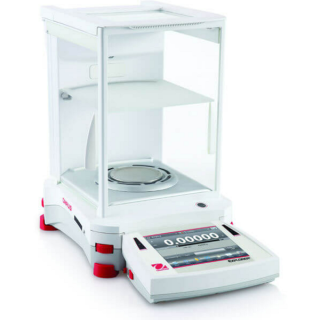 Analytical Balance, 0.01/0.1mg - 52/120g, OHAUS, USA
1,644,224.00৳
Analytical Balance, 0.01/0.1mg - 52/120g, OHAUS, USA
1,644,224.00৳
-
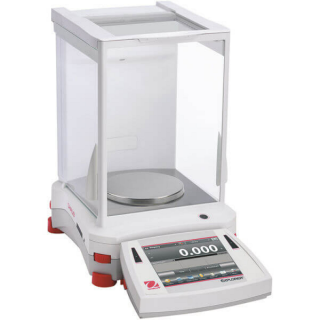 Precision Balance, 1mg - 220g, OHAUS, USA
788,606.00৳
Precision Balance, 1mg - 220g, OHAUS, USA
788,606.00৳
-
 Thoracic Spinal Column
-
 55CM Unisex Torso 20 Parts
-
 Middle Heart Model
-
 Life Size Human Muscle Model 29 Parts
-
 The Development Process for Fetus
-
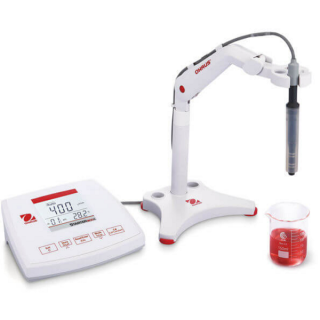 pH Meter, Bench Type, OHAUS, USA
-
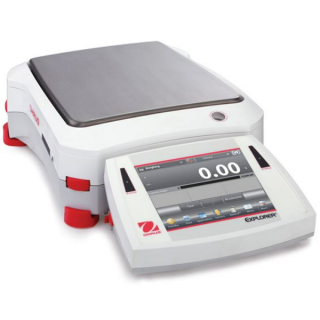 Precision Balance, 0.01 g - 2,200 g, OHAUS, USA
788,606.00৳
Precision Balance, 0.01 g - 2,200 g, OHAUS, USA
788,606.00৳
-
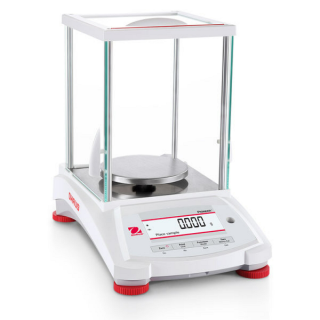 Precision Balance, 0.001 g - 320 g, OHAUS, USA
307,034.00৳
Precision Balance, 0.001 g - 320 g, OHAUS, USA
307,034.00৳
Reviews
There are no reviews yet.