
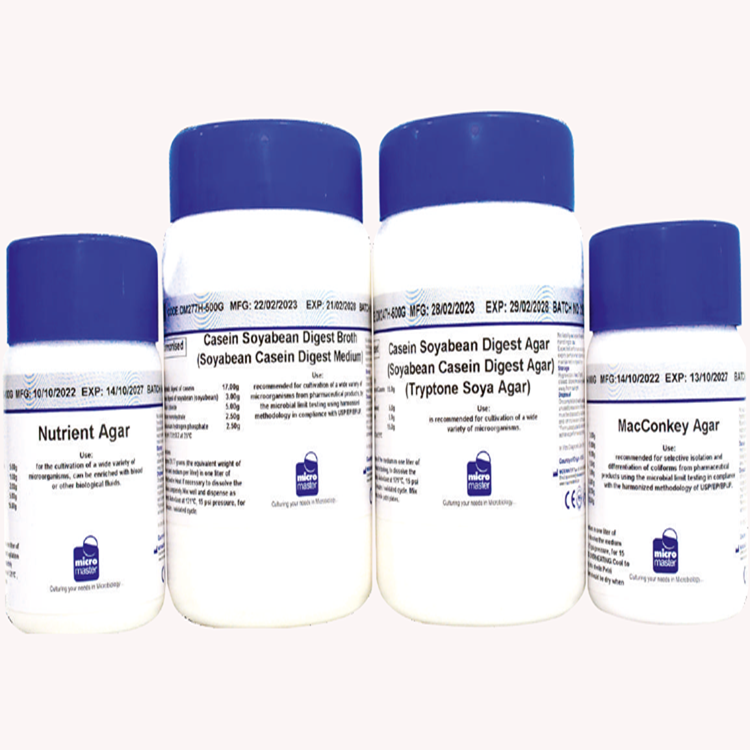
Plate Count Agar
Pack Size: 500gm
Brand: Micro Master
Origin: India
Intended Use
Plate Count Agar (DM 214) is used for determining plate count of microorganisms in milk and dairy products by pour plate technique.
Product Summary and Explanation
Plate Count Agar is equivalent to the medium recommended by APHA for the isolation of microorganisms in milk and other dairy products.(1) The APHA suggests the pour-plate method using diluted samples, and counting colonies after incubation. Sterile molten agar is added to these plates and plates are rotated gently to ensure uniform mixing of the sample with agar. Incubation is for 48 hours at 32°C or at 35°C for the Standard Plate Count. For the enumeration of micro-organisms with other temperature requirements, plates may also be incubated for 7 – 10 days at 5-7°C: for 3-5 days at 20°C; for 2-3 days at 45°C; or for 48 hours at 55°C. Plate Count Agar is also used for the estimation of the number of live heterotrophic bacteria in water.
Principles of the Procedure
Enzymatic Digest of Casein and Yeast Extract provide the carbon and nitrogen sources and Vitamin B complex required for growth of a wide variety of organisms. Dextrose is a source of fermentable carbohydrate (energy source). Agar is the solidifying agent.
Formula / Liter
| Ingredients | : Gms / Litre |
| Enzymatic Digest of Casein | : 5.00 |
| Yeast Extract | : 2.50 |
| Dextrose | : 1.00 |
| Agar | : 9.00 |
| Final pH: 7.0 ± 0.2 at 25°C | |
| Formula may be adjusted and/or supplemented as required to meet performance specifications | |
Precautions
1. For Laboratory Use only.
2. IRRITANT. Irritating to eyes, respiratory system, and skin.
Directions
1. Suspend 17.5 g of the medium in one liter of deionised water.
2. Heat to boiling to dissolve the medium completely
3. Autoclave at 121°C, 15 psi pressure, for 15 minutes.
Quality Control Specifications
| Dehydrated Appearance | : Cream to yellow colored, homogeneous, free flowing powder |
| Solution | : 1.75% Solution in Distilled or deionized water is soluble on boiling, Light yellow colored, and very slightly to slightly opalescent. |
| Prepared Medium | : Light yellow colored, slightly opalescent gel. |
| Reaction of 1.75% Solution | : pH 7.0 + 0.2 at 25°C |
| Gel Strength | : Firm, compared to 0.9% Agar Gel. |
Expected Cultural Response: Cultural response on Plate Count Agar at 35 – 37°C after 18 – 24 hours incubation.
| Sr. No. |
Organisms | Results to be achieved | ||
| Inoculum (CFU) |
Growth | Recovery | ||
| 1. | Escherichia coli ATCC 25922 | 50-100 | Luxuriant | >=70% |
| 2. | Bacillus subtilis ATCC 6633 | 50-100 | Luxuriant | >=70% |
| 3. | Enterococcus faecalis ATCC 29212 | 50-100 | Luxuriant | >=70% |
| 4. | Lactobacillus casei ATCC 9595 | 50-100 | Luxuriant | >=70% |
| 5. | Lactobacillus acidophilus ATCC 4356 | 50-100 | Luxuriant | >=70% |
| 6. | Staphylococcus aureus ATCC 25923 | 50-100 | Luxuriant | >=70% |
| 7. | Streptococcus pyogenes ATCC 19615 | 50-100 | Luxuriant | >=70% |
The organisms listed are the minimum that should be used for quality control testing.
Test Procedure
1. Perform serial dilutions on samples (food, water, milk) to be tested using the heterotrophic (standard) plate count method. Select dilutions that will yield plates with counts of 30 – 300 colonies.
2. Dispense a portion of each test dilution (e.g., 0.1 mL, 1.0 mL) into separate test dilutions.
3. Add 10 – 12 mL of tempered (45°C) Plate Count Agar to petri dishes containing test dilutions.
4. Swirl the dishes to thoroughly mix the agar and test dilution.
5. Allow plates to cool and solidify.
6. Incubate at 32 ± 1°C for 48 hours.
7. Compare with previous lot/batch using pasteurized and raw milk samples, incubated at 32-35°C for 48 hours.
Results
Count colonies on all plates containing 30 – 300 colonies. Calculate bacterial count per milliliter of sample by multiplying the average number of colonies per plate by the reciprocal of the dilution used. Report the count as CFU/mL.
Storage
Store the sealed bottle containing the dehydrated medium at 10 – 30°C. Once opened and recapped, place container in a low humidity environment at the same storage temperature. Protect from moisture and light.
Expiration
Refer to the expiration date stamped on the container. The dehydrated medium should be discarded if not free flowing, or if the appearance has changed from the original color. Expiry applies to medium in its intact container when stored as directed.
Limitations of the Procedure
Due to nutritional variation, some strains may be encountered that grow poorly or fail to grow on this medium.
Related products



Top rated products
-
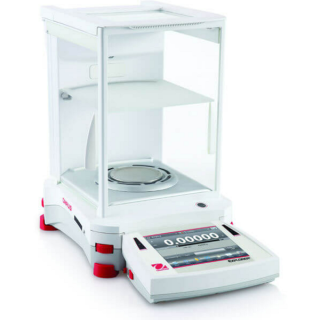 Analytical Balance, 0.01/0.1mg - 52/120g, OHAUS, USA
1,644,224.00৳
Analytical Balance, 0.01/0.1mg - 52/120g, OHAUS, USA
1,644,224.00৳
-
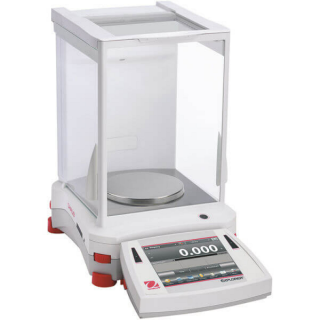 Precision Balance, 1mg - 220g, OHAUS, USA
788,606.00৳
Precision Balance, 1mg - 220g, OHAUS, USA
788,606.00৳
-
 Thoracic Spinal Column
-
 55CM Unisex Torso 20 Parts
-
 Middle Heart Model
-
 Life Size Human Muscle Model 29 Parts
-
 The Development Process for Fetus
-
 pH Meter, Bench Type, OHAUS, USA
-
 Precision Balance, 0.01 g - 2,200 g, OHAUS, USA
788,606.00৳
Precision Balance, 0.01 g - 2,200 g, OHAUS, USA
788,606.00৳
-
 Precision Balance, 0.001 g - 320 g, OHAUS, USA
307,034.00৳
Precision Balance, 0.001 g - 320 g, OHAUS, USA
307,034.00৳
Reviews
There are no reviews yet.