

Sabouraud Dextrose Agar
Pack Size: 500gm
Brand: Micro Master
Origin: India
Intended Use
Sabouraud Dextrose Agar (DM232H) is recommended for the cultivation of yeast, mould and aciduric bacteria from pharmaceutical products using the microbial limit testing in compliance with the harmonized methodology of USP/EP/BP/JP.
Product Summary and Explanation
Fungi were among the first microorganisms recognized because some of the fruiting structures, such as the mushrooms, are large enough to be seen without a microscope. Fungi can be grouped simply on the basis of morphology as either yeasts or moulds.(1) Fungal diseases that occur on the skin, hair and mucous membrane are called superficial mycoses, and the organism that cause them, the dermatophytes.(2) It is good practice to use a medium that favors the growth of fungi but is not optimal for the growth of bacteria, when fungi are to be isolated.
Sabouraud Dextrose Agar is a modified medium by Carliers, for the cultivation of fungi, particularly dermatophytes and aciduric microorganisms, based on the original formulation of Dextrose Agar described by Sabouraud.(2,4) The high dextrose concentration and low pH of 5.6 of this medium is favorable for the growth of fungi especially dermatophytes, and slightly inhibitory to contaminating bacteria in clinical specimen.(5,6) Sabouraud Dextrose Agar is used for determining the microbial content of cosmetics,(7) in the mycological evaluation of food.(8,9) This medium can also be used, clinically to aid in the diagnosis of yeast and fungal infections.(10,11) Sabouraud Dextrose Agar is recommended for microbiological examination of non-sterile products in accordance with the harmonized method of USP/EP/BP/JP.(12,13,14,15)
Principles of the Procedure
Sabouraud dextrose Agar contains peptic digest of animal tissue and pancreatic digest of casein which provides nitrogenous compounds. Dextrose provides an energy source for the growth of microorganisms. High dextrose concentration and low pH favors fungal growth and inhibits contaminating bacteria from test samples.
Formula / Liter
| Ingredients | : Gms / Liter |
| Dextrose | : 40.00 |
| Mixture of Peptic digest of animal tissue and Pancreatic digest of casein (1:1) | : 10.00 |
| Agar | : 15.00 |
| Final pH: 5.6 ± 0.2 at 25°C | |
| Formula may be adjusted and/or supplemented as required to meet performance specifications | |
Precautions
1. For Laboratory Use only.
2. IRRITANT. Irritating to eyes, respiratory system, and skin.
Directions
1. Suspend 65 grams of the medium in one liter of distilled water.
2. Heat to boiling, to dissolve the medium completely.
3. Autoclave at 121°C, 15 psi pressure, for 15 minutes / validated cycle.
4. Mix well and pour into sterile petri plates.
Quality Control Specifications
| Dehydrated Appearance | : Cream to yellow colored, homogeneous, free flowing powder |
| Prepared Medium | : Light amber coloured clear to slightly opalescent gel forms in Petri plates |
| Reaction of 6.5% Solution | : pH: 5.6 ± 0.2 at 25°C |
| Gel Strength | : Firm, comparable with 1.5% Agar gel |
| Growth Promotion Test | : Growth Promotion was carried out in accordance with the harmonized method of ICH (USP/EP/BP/JP), after an incubation at 30-35°C for 24-48 hours. Recovery rate is considered as 100% for bacteria growth on Soybean Casein Digest Agar and fungus growth on Sabouraud Dextrose Agar |
| Growth Promoting Properties | : Growth of microorganism comparable to that previously obtained with previously tested and approved lot of medium occurs at the specified temperature for not more than the shortest period of time specified inoculating <= 100 cfu (at 30 -35°C for <=24 hours). |
| Indicative properties | : Colonies are comparable in appearance and indication reaction to those previously obtained with previously tested and approved lot of medium occurs for the specified temperature for a period of time within the range specified inoculating <=100cfu (at 30-35°C for 24-48 hours). |
Cultural Response:
| Sr. No. |
Organisms | Results to be achieved | ||||
| Inoculum (CFU) |
Growth | Observed lot value (CFU) |
Recovery | Incubation temperature & time |
||
| Growth Promotion + Indicative | ||||||
| 1. | Candida albicans ATCC 10231 |
50-100 | good-luxuriant (white colonies) |
35-100 | >=70% | 30-35°C 24-48 hrs |
| Growth Promotion + Total yeast and mould count | ||||||
| 2. | Candida albicans ATCC 10231 |
50-100 | good-luxuriant | 35-100 | >=70% | 20-25°C <=5 d |
| 3. | Aspergillus Brasiliense’s ATCC 16404 |
50-100 | good-luxuriant | 35-100 | >=70% | 20-25°C <=5 d |
| Additional Microbiological Testing | ||||||
| 4. | Candida albicans ATCC 2091 |
50-100 | good-luxuriant | 35-100 | >=70% | 30-35°C 24-48 hrs |
| 5. | Saccharomyces cerevisiae ATCC 9763 |
50-100 | good-luxuriant | 35-100 | >=70% | 30-35°C 24-48 hrs |
| 6. | Escherichia coli ATCC 25922 |
50-100 | good (inhibited on media with low pH) |
35-100 | >=70% | 30-35°C 24-48 hrs |
| 7. | Escherichia coli ATCC 8739 |
50-100 | good (inhibited on media with low pH) |
35-100 | >=70% | 30-35°C 24-48 hrs |
| 8. | Escherichia coli NCTC 9002 |
50-100 | good (inhibited on media with low pH) |
35-100 | >=70% | 30-35°C 24-48 hrs |
| 9. | Trichophyton rubrum ATCC 28191 |
50-100 | good | 35-100 | >=70% | 20-25°C <=5 d |
| 10. | Lactobacillus casei ATCC 334 |
50-100 | good-luxuriant | 35-100 | >=70% | 30-35°C 24-48 hrs |
The organisms listed are the minimum that should be used for quality control testing.
Test Procedure
Refer to appropriate references for standard testing procedures.
Results
1. Count the number of colonies and consider the dilution factor (if test sample was diluted) to determine the yeast and/or mold counts per gram or milliliter of material.
2. Yeasts grow creamy to white colonies. Molds will grow as fuzzy colonies of various colors.
3. The total combined yeast and molds count is considered to be equal to the number of colony forming unit found using this medium.
4. If bacterial colonies are detected they are counted as part of total yeast and mold count.
5. In case the bacterial colonies exceeds the acceptance criterion, then antibiotics can be supplemented in this medium
Storage
Store the sealed bottle containing the dehydrated medium at 10-30°C. Once opened and recapped, place container in a low humidity environment at the same storage temperature. Protect from moisture and light.
Expiration
Refer to the expiration date stamped on the container. The dehydrated medium should be discarded if not free flowing, or if the appearance has changed from the original color. Expiry applies to medium in its intact container when stored as directed.
Limitations of the Procedure
1. Some pathogenic fungi may produce infective spores, which are easily dispersed in air, so examination should be carried out in safety cabinet.
2. For heavily contaminated samples, the plate must be supplemented with inhibitory agents for inhibiting bacterial growth.
3. For identification, organisms must be in pure culture. Morphological, biochemical and/or serological tests should be performed for final identification.
4. Consult appropriate texts for detailed information and recommended procedures.
Related products


Top rated products
-
 Skeleton with Muscles and Ligaments 180cm Tall
-
 Cervical Vertebral Column with Neck Artery
-
 New Style Brain Model 9 Parts
-
 Lung Model 1 Part
-
 Advanced Nurse Training Doll with Blood Pressure Training Arm (male/female)
-
 Male Condom Simulator
-
 pH Meter, Bench Type, OHAUS, USA
-
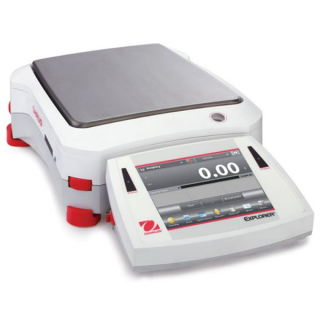 Precision Balance, 0.1 g - 6,200 g, OHAUS, USA
৳ 740,194.00
Precision Balance, 0.1 g - 6,200 g, OHAUS, USA
৳ 740,194.00
-
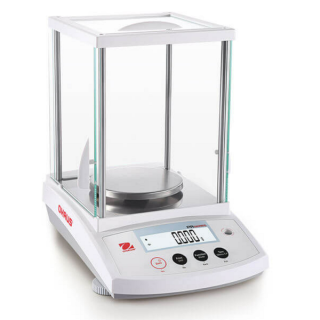 Precision Balance, 0.001 g - 420 g, OHAUS, USA
৳ 244,608.00
Precision Balance, 0.001 g - 420 g, OHAUS, USA
৳ 244,608.00
-
 Portable Balance, 0.01 g - 620 g, OHAUS, USA
৳ 88,416.00
Portable Balance, 0.01 g - 620 g, OHAUS, USA
৳ 88,416.00
Reviews
There are no reviews yet.