

TCBS Agar
Pack Size: 500gm
Brand: Micro Master
Origin: India
Intended Use
TCBS Agar (DM376BS) is a differential medium recommended for selective isolation of Vibrio cholerae and other enteropathogenic Vibrios, as per Indian Standard published by BIS.
Product Summary and Explanation
Vibrio spp. Are most widely recognized for their role in causing Cholera and diarrhea diseases and also causing food poisoning. The isolation and cultivation of Vibrio species has been enhanced by the development of media which are highly selective for vibrios. It was developed by Kobayashi et al.(1), who modified the formula of Nakanishi.(2) , which resulted in TCBS Agar, a selective and differential media for the isolation and cultivation of vibrios. Although this medium was originally designed for the isolation of V. Cholera and V. parahaemolyticus, most Vibrios grow to healthy large colonies with many different colonial morphologies. Present formulation of TCBS Agar is recommended by BIS(3) for isolation of Vibrio cholerae and Vibrio parahaemolyticus. Inoculate the sample in Alkaline Peptone Water (DM009BS) incubate overnight at 35°C. Subculture the growth TCBS Agar.
Principles of the Procedure
Peptone special and yeast extract provide nitrogenous compounds, vitamin B complex and other essential growth Nutrients. TCBS has a very high pH (8.5-9.5) which suppresses growth of intestinal flora other than Vibrio spp.(9) Oxbile, a derivative of bile salts and sodium citrate inhibit gram-positive bacteria and coliforms.(10) TCBS Agar, Selective has an additional selective ingredient i.e. sodium cholate for improved selectivity. One percent sodium chloride is incorporated into the medium to provide optimum growth and metabolic activity of halophilic Vibrio spp. Sodium thiosulphate serves as a good source of sulphur, which in combination with ferric citrate detects the production of hydrogen sulphide. Sucrose is fermentable sugar, with the help of bromothymol blue and thymol blue indicators, allows for the differentiation of those Vibrio spp. which utilize sucrose. The alkaline pH of the medium improves the recovery of V. cholera . Strains of V. cholera produce yellow colonies on TCBS Agar because of fermentation of sucrose. V. alginolyticus also produce yellow colonies. V. parahaemolyticus is a sucrose non-fermenting organism and therefore produces blue-green colonies, as does V. vulnificus . species that are sucrose-fermenters may form yellow colonies9. TCBS Agar is not a suitable medium for oxidase testing of Vibrio species.(10) A few strains of V. cholera may appear green or colourless on TCBS Agar due to delayed sucrose fermentation.(9)
Formula / Liter
| Ingredients | : Gms / Litre |
| Peptone, Special | : 10.00 |
| Yeast Extract | : 5.00 |
| Sodium Citrate | : 10.00 |
| Sodium Thiosulfate | : 10.00 |
| Oxbile | : 5.00 |
| Sodium Cholate | : 3.00 |
| Sucrose | : 20.00 |
| Sodium Chloride | : 10.00 |
| Ferric Citrate | : 1.00 |
| Bromothymol Blue | : 0.04 |
| Thymol Blue | : 0.04 |
| Agar | : 15.00 |
| Final pH: 8.6 ± 0.2 at 25°C | |
| Formula may be adjusted and/or supplemented as required to meet performance specifications | |
Precautions
1. For Laboratory Use only.
2. IRRITANT, mainly irritating to eyes, respiratory system, and skin. Handle in accordance with good laboratory hygiene and safety practice. Wash hands before breaks and at the end of workday. To protect, use safety glasses and gloves during handling.
3. Use personal protective equipment. Avoid dust formation. Avoid breathing vapors, mist or gas. Ensure adequate ventilation. Avoid breathing dust.
4. Do not let product enter drains.
5. After use, prepared plates, specimen containers and other contaminated materials must be sterilized by autoclaving before discarding.
Directions
1. Suspend 89.08 g of the medium in one liter of distilled water.
2. Heat with frequent agitation and boil completely to dissolve the medium.
3. Do not overheat. Do not autoclave.
4. Cool to 45-50°C and pour into sterile Petri plates.
Quality Control Specifications
| Dehydrated Appearance | : Light beige to green-beige colored, homogeneous, free flowing powder |
| Solution | : 8.9% Solution in Distilled or deionized water is soluble on boiling, bluish green / forest green colored, and very slightly to slightly opalescent. |
| Prepared Medium | : Bluish / Forest green, clear and to slightly opalescent gel |
| Reaction of 8.9% Solution | : pH 8.6 + 0.2 at 25°C |
| Gel Strength | : Firm, compared to 1.5% Agar Gel. |
Expected Cultural Response: Cultural response on TCBS Agar, Selective observed after incubation at 35-37°C for 18-48 hours.
| Sr. No. |
Organisms | Results to be achieved | |||
| Inoculum (CFU) | Growth | Recovery | Colour of colony | ||
| 1. | Enterococcus faecalis ATCC 29212 | >=10³ | Inhibited | 0% | —- |
| 2. | Escherichia coli ATCC 25922 | >=10³ | Inhibited | 0% | —- |
| 3. | Shigella flexneri ATCC 12022 | >=10³ | Inhibited | 0% | —- |
| 4. | Vibrio cholerae ATCC 15748 | 50-100 | Good luxuriant | >=50% | Yellow |
| 5. | Vibrio parahaemolyticus ATCC 17802 | 50-100 | Good luxuriant | >=50% | Blue |
| 6. | Vibrio fluvialis ATCC 33809 | 50-100 | Good luxuriant | >=50% | Yellow |
| 7. | Vibrio vulnificus ATCC 29306 | 50-100 | Fair-good | >=30% | Greenish Yellow |
The organisms listed are the minimum that should be used for quality control testing.
Test Procedure
1. Observe aseptic techniques.
2. The agar surface should be smooth and moist, but without excessive moisture.
3. Streak the specimen as soon as possible after it is received in the laboratory. Samples may be swabbed directly onto the plated medium.
4. Heavy inoculation is recommended, especially if specimens are not fresh, as the medium is highly selective and vibrios tend to die rather easily.
5. The medium should be inoculated heavily with faecal specimens because growth of few species may be inhibited on the medium due to fermentation of sucrose and accumulation of acids.
6. Swabs containing specimen material should be transported to the laboratory in Cary and Blair Transport Medium(4,6,14) if a delay in reaching the laboratory is anticipated.
7. Specimens for cultivation of vibrios should not be frozen.
8. Incubate plates, protected from light, at 35 ± 2°C in an aerobic atmosphere for 18-24 hours.
Results
1. After 18-24 hours of incubation at 32-35°C, sucrose-fermentating vibrios (V. cholerae, V. alginolyticus, V. hareyi, V. cincinnatiensis, V. fluvialis, V. furnissii, V. metschnikovii, and some V. vulnificus) appear smooth, opaque, thin edged
2. yellow colonies on TCBS Agar.(3)
3. Most other clinically important vibrios, including V. parahaemolyticus, do not ferment sucrose and appear as bluish green colonies.(2)
4. Additional biochemical and/or biochemical tests are necessary for a final identification and for a differentiation of sucrose-fermenting and sucrose-nonfermenting species.(1,2,7,8)
5. TCBS Agar is highly selective for Vibrio species. However, occasional isolates of Pseudomonas and Aeromonas may also form blue green colonies on TCBS Agar.(9)
6. Any H2S negative colony of TCBS Agar can be considered presumptive positive for Vibrio.
Related products


Top rated products
-
 pH Meter, Bench Type, OHAUS, USA
-
 Moisture Analyzer MB 90, OHAUS, USA
৳ 791,154.00
Moisture Analyzer MB 90, OHAUS, USA
৳ 791,154.00
-
 Precision Balance, 0.01 g - 4,200 g, OHAUS, USA
৳ 541,450.00
Precision Balance, 0.01 g - 4,200 g, OHAUS, USA
৳ 541,450.00
-
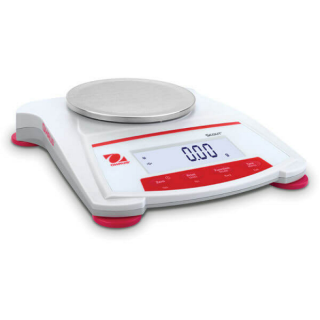 Portable Balance, 0.01 g - 620 g, OHAUS, USA
৳ 159,250.00
Portable Balance, 0.01 g - 620 g, OHAUS, USA
৳ 159,250.00
-
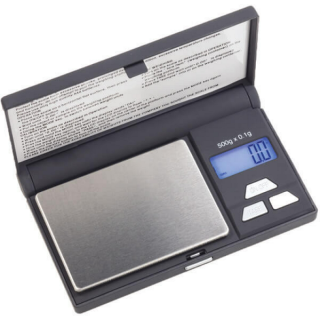 Portable Balance, 0.05 g - 300 g, (2 Digit) OHAUS, USA
৳ 10,447.00
Portable Balance, 0.05 g - 300 g, (2 Digit) OHAUS, USA
৳ 10,447.00
-
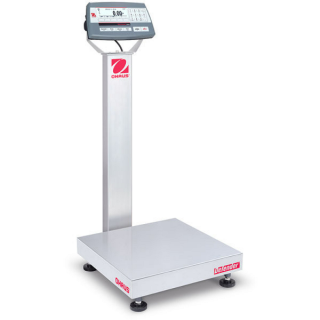 Bench Scale, 2 g - 30 kg, OHAUS, USA
৳ 280,280.00
Bench Scale, 2 g - 30 kg, OHAUS, USA
৳ 280,280.00
-
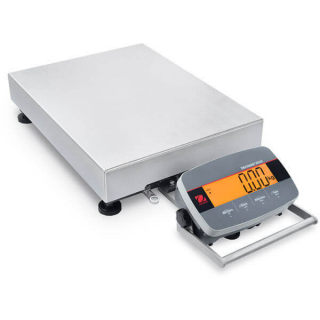 Bench Scale, 5 g - 60 kg, OHAUS, USA
৳ 150,332.00
Bench Scale, 5 g - 60 kg, OHAUS, USA
৳ 150,332.00
-
 Bench Scale, 2/5 g - 30/60 kg, OHAUS, USA
৳ 461,188.00
Bench Scale, 2/5 g - 30/60 kg, OHAUS, USA
৳ 461,188.00
-
 Bench Scale, 50 g - 300 kg, OHAUS, USA
-
 Bench Scale, 1 g - 6 kg, OHAUS, USA
৳ 121,030.00
Bench Scale, 1 g - 6 kg, OHAUS, USA
৳ 121,030.00
Reviews
There are no reviews yet.